
Temporary works and stability during erection
A frame is at its most vulnerable while it is going up. Stability in that condition is designed, not judged on site.
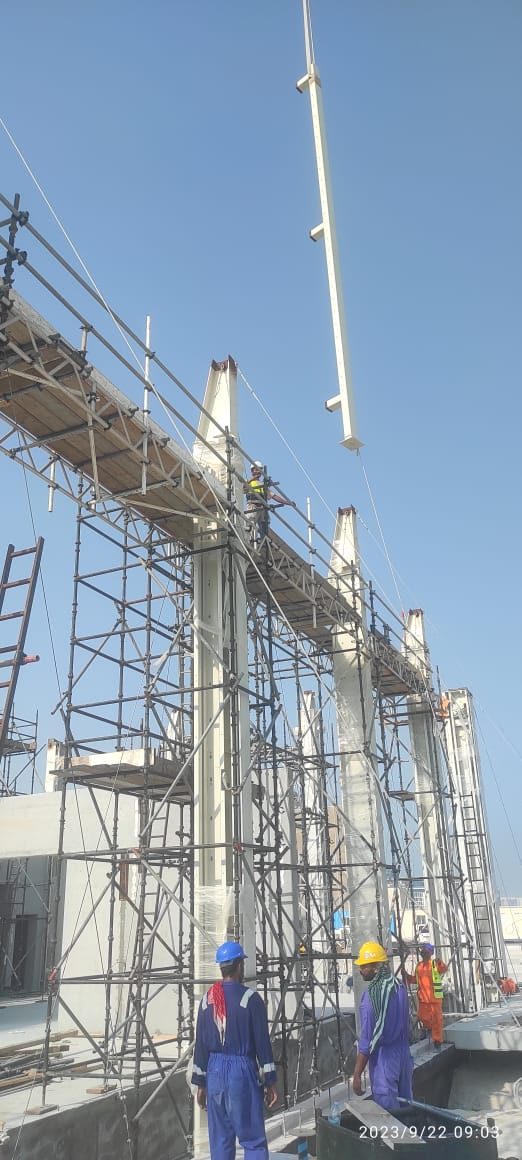
A completed steel frame is stable because every element is in place. During erection none of that is true yet, and the part-built frame is a different structure from the one that was designed.
Why the partial frame is the risk
Stability usually depends on bracing, and bracing is installed after the members it braces. Between those two moments the frame relies on temporary support. A column standing on its base plate with one beam attached is not a stable structure, however substantial it looks.
What temporary works covers
- Guys and temporary bracing, and the sequence in which they may be removed
- Props and shoring where needed
- Temporary connections carrying load before final bolting or welding
- The erection sequence itself, which is a stability document as much as a programme
How it should be handled
Designed by someone competent, issued as drawings and a method statement, checked on site against what was designed, and — the step most often skipped — removed only in the stated order, once the permanent structure can take over.
The failure mode
Almost always the same: temporary restraint removed early to get a crane away or to let another trade in. The frame stands, so the shortcut appears to have worked, and the next load or gust finds the weakness. The removal sequence is part of the design, not a suggestion.